Cavity Wall vs External Wall Insulation: Which Suits You?
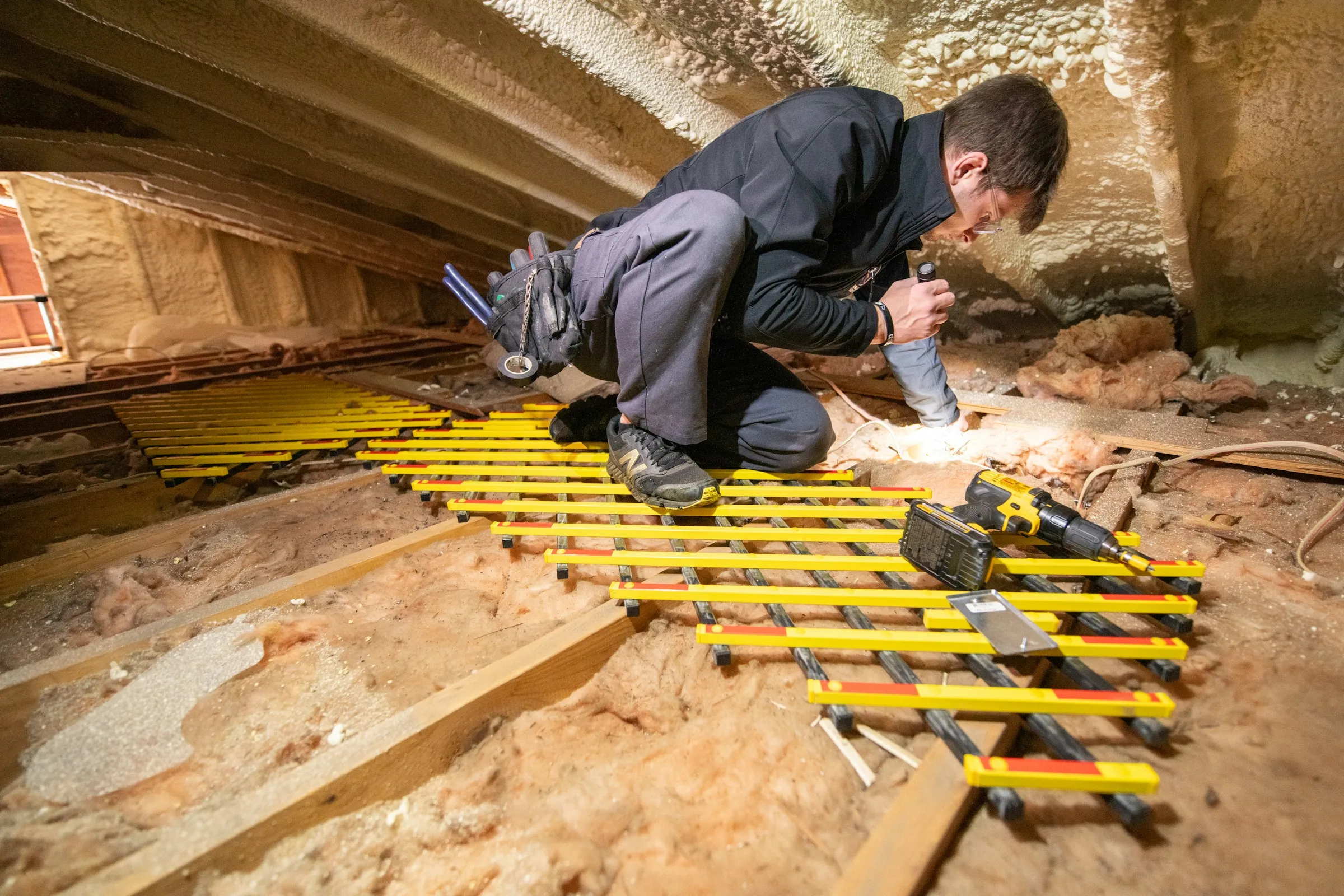
Two Very Different Approaches to the Same Problem
About a third of a home’s heat escapes through the walls. Wall insulation fixes that, but the right method depends on your house. Cavity wall injection and external wall insulation (EWI) are the two most common options in Ireland, and they differ in cost, disruption, and performance by a wide margin.
This guide compares them side by side so you can figure out which suits your home, your budget, and your goals.
Side-by-Side Comparison
| Feature | Cavity Wall Injection | External Wall Insulation |
|---|---|---|
| Typical cost (semi-d) | €600 - €2,500 | €18,000 - €26,000 |
| SEAI grant (semi-d) | Up to €1,300 | Up to €6,000 |
| You pay (approx) | €0 - €1,200 | €12,000 - €20,000 |
| Installation time | 1 day | 2 - 4 weeks |
| Disruption | Minimal (work done from outside) | Significant (scaffolding, noise) |
| Heat loss reduction | 15 - 20% | 25 - 35% |
| Changes exterior appearance | No | Yes (new render finish) |
| Suitable for solid walls | No | Yes |
| BER improvement | 1 - 2 grades typical | 2 - 3 grades typical |
| Lifespan | 25+ years | 25 - 30 years (render may need refresh) |
The difference in cost is stark. Cavity wall injection costs a fraction of EWI, but it only works if your home has unfilled cavity walls. If your walls are solid, EWI or internal dry lining are your options.
How Cavity Wall Injection Works
Small holes are drilled through the external wall at regular intervals. Insulation material (bonded bead, mineral wool, or polyurethane foam) is injected under pressure to fill the gap between the inner and outer wall leaves. The holes are sealed and the job is done in a day.
It’s quick, cheap, and causes almost no disruption. You don’t need to move furniture or redecorate. For homes with unfilled cavities, this is the obvious starting point.
For full cost details, see our cavity wall insulation cost guide.
How External Wall Insulation Works
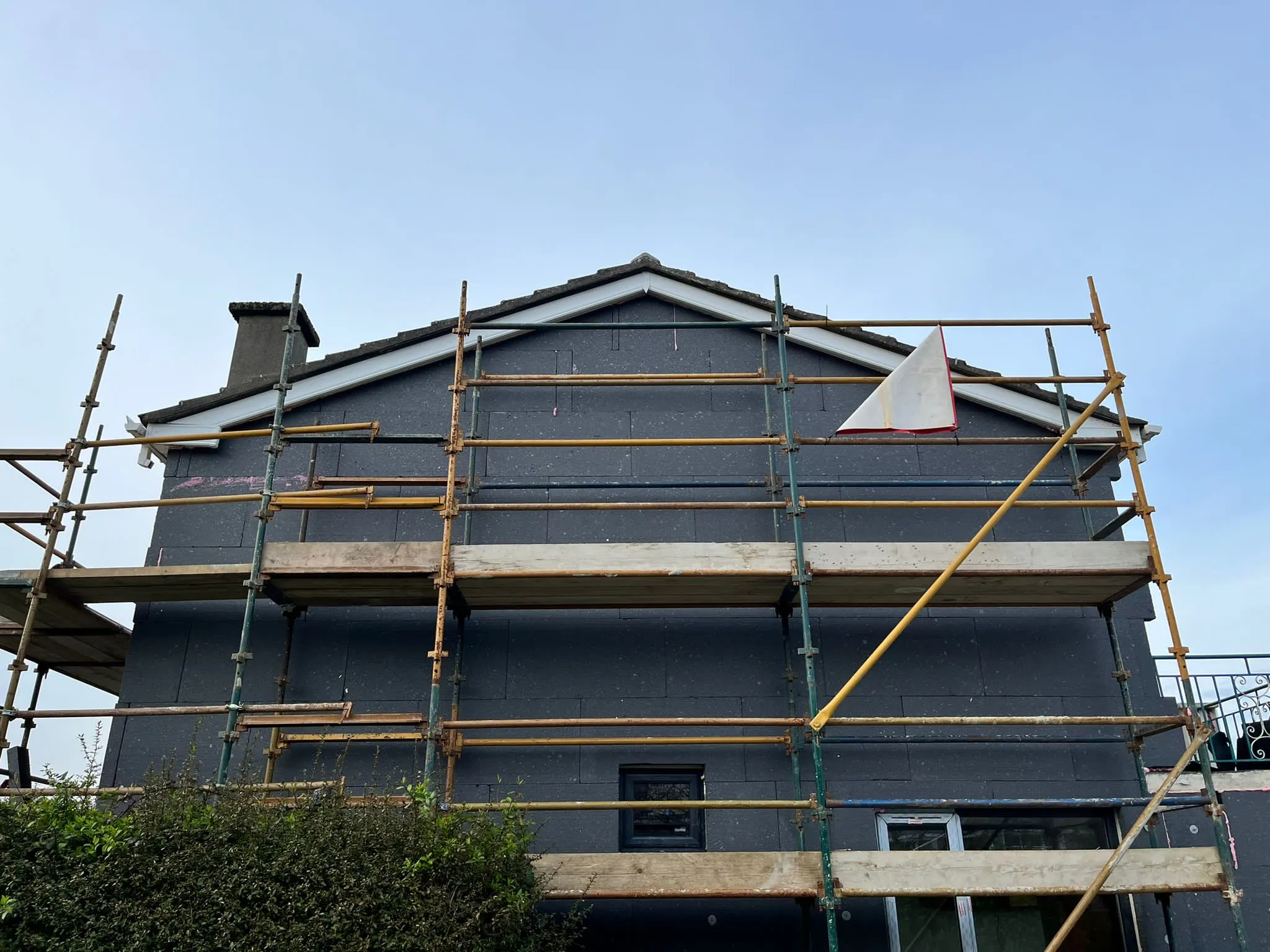
Rigid insulation boards are fixed to the outside of the walls with adhesive and mechanical fixings. A basecoat with fibreglass mesh goes over the boards, followed by a render finish. The result is a thick, continuous insulation layer that wraps the entire building envelope.
This is a major project. Scaffolding goes up for weeks. Window sills often need extending. Fascia and soffit details may need adjusting. But the thermal performance is significantly better than cavity fill alone, and your house gets a new exterior finish in the process.
For detailed EWI pricing, see our external wall insulation cost guide.
Cost Comparison by Property Type
| Property Type | Cavity Wall Cost | Cavity Grant | EWI Cost | EWI Grant |
|---|---|---|---|---|
| Mid-terrace | €500 - €1,200 | Up to €850 | €8,000 - €13,000 | Up to €3,500 |
| Semi-detached | €600 - €2,500 | Up to €1,300 | €18,000 - €26,000 | Up to €6,000 |
| Detached | €1,200 - €3,000 | Up to €1,800 | €25,000 - €34,000 | Up to €8,000 |
Even with grants, the out-of-pocket cost for EWI is ten to twenty times higher than cavity fill. The grant covers a larger proportion of cavity wall work, which is why many homeowners end up paying very little for cavity injection.
For the full grant details, see our SEAI insulation grants guide.
Which One Suits Your Home?
Your home has unfilled cavity walls
Start with cavity wall injection. It’s one of the most cost-effective insulation upgrades available. Most homes built between the 1930s and 1990s have cavity walls, though some from the 1990s onwards may already be partially filled.
If you want maximum performance after filling the cavities, you can add EWI later as a second measure. Since March 2026, the SEAI allows you to claim a grant for both cavity fill and external insulation as separate measures.
Your home has solid walls
Homes built before the 1930s typically have solid stone or solid brick walls with no cavity to fill. External wall insulation is the main option here, along with internal dry lining. EWI is generally preferred because it avoids losing internal floor space, eliminates cold bridges, and doesn’t disrupt the inside of the house during installation.
Your home already has cavity fill
If your cavities were filled years ago but you still find the house cold, EWI is the next step. Some older cavity fills have settled or degraded over time, and adding an external layer on top gives a significant performance boost.
You’re planning a deeper retrofit
If you’re upgrading heating systems, windows, and insulation together, EWI makes more sense as part of a whole-house approach. The One Stop Shop route offers higher grant support for comprehensive retrofits that achieve a BER B2 or better.
Can You Do Both?
Yes, and it’s becoming more common. Filling the cavity first and adding EWI later gives excellent overall thermal performance. The two insulation layers work together, and you can claim SEAI grants for both measures separately.
The practical approach for most homeowners: fill the cavity now (cheap, quick, immediate benefit), and budget for EWI as a later project if and when you’re ready for a bigger investment.
Internal Dry Lining: The Third Option
Internal dry lining (fixing insulation boards to the inside of external walls) sits between cavity fill and EWI in both cost and performance. For a semi-detached house, expect to pay €4,500 to €10,000 with an SEAI grant of up to €3,500.
It’s cheaper than EWI and works on solid walls, but it does reduce room sizes slightly and means redecorating affected rooms. It’s worth considering if EWI isn’t practical (listed buildings, conservation areas, or if you can’t afford the full cost of EWI).
Frequently Asked Questions
Is cavity wall insulation enough on its own?
For many homes, yes. Filling empty cavities typically reduces wall heat loss by 15% to 20%, which makes a real difference to comfort and heating bills. If your home still feels cold after cavity fill, the issue may be the attic, windows, or draughts rather than the walls. See our home insulation cost guide for the full picture.
Can I get SEAI grants for both cavity and external wall insulation?
Yes. Since March 2026, the SEAI allows a second wall measure. If you’ve already had cavity wall insulation done, you can apply for an external wall insulation grant separately. The maximum wall insulation grant is €8,000 overall.
Does external wall insulation need planning permission?
Generally no. EWI is considered an exempted development in most cases. However, homes in conservation areas or protected structures may need permission. Check with your local authority if you’re unsure.
How do I know if my home has cavity walls?
A wall thickness of 270mm to 300mm usually indicates a cavity wall. Solid walls are typically around 225mm (brick) or thicker (stone). An installer can confirm by drilling a small test hole. Most housing estates built from the 1950s to 1990s have cavity walls.
Which gives a better BER rating improvement?
External wall insulation typically improves a BER rating by two to three grades, compared to one to two grades for cavity fill. If achieving a specific BER target matters (for grant eligibility or property value), EWI delivers a bigger jump.