External Wall Insulation Cost in Ireland: Full 2026 Price Guide
How Much Does External Wall Insulation Cost in Ireland?
External wall insulation (EWI) is the most expensive type of home insulation, but also one of the most effective. For a typical semi-detached house, expect to pay between €18,000 and €26,000 before grants. After the SEAI grant of up to €6,000, that comes down to roughly €12,000 to €20,000.
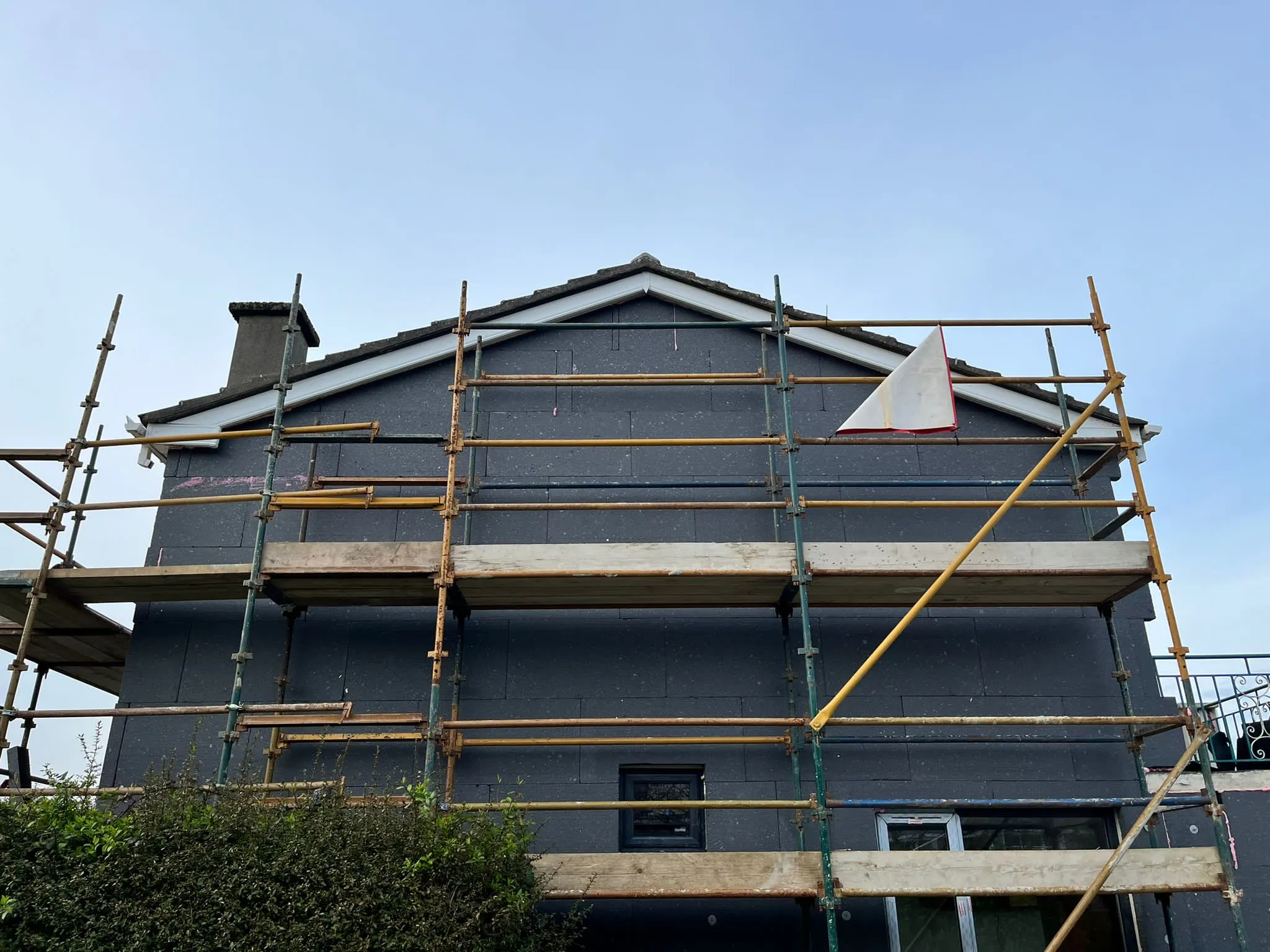
The wide price range reflects differences in house size, material choice, and finish type. A mid-terrace house with a small exposed wall area costs far less than a large detached property.
For an overview of all insulation types and how they compare, see our complete insulation cost guide.
EWI Cost Per Square Metre
Most contractors quote external wall insulation per square metre of wall area. Typical rates in Ireland:
| Material | Cost Per m2 |
|---|---|
| EPS (expanded polystyrene) | €50 - €75 |
| Mineral wool | €70 - €100 |
| Wood fibre | €90 - €120 |
| PIR / phenolic board | €100 - €150 |
These rates include supply and fitting of the insulation board, basecoat, mesh reinforcement, and a standard render finish. Premium finishes (brick slips, stone effect, or decorative render) add to the cost.
EPS is the most common and most affordable option. Mineral wool offers better fire resistance and acoustic performance. Wood fibre is used mainly on older buildings where breathability matters. PIR boards deliver superior thermal performance per thickness but cost the most.
Cost by Property Type (Before and After Grants)
| Property Type | Typical Cost | SEAI Grant | You Pay (approx) |
|---|---|---|---|
| Mid-terrace house | €8,000 - €13,000 | Up to €3,500 | €4,500 - €9,500 |
| End-of-terrace | €18,000 - €26,000 | Up to €6,000 | €12,000 - €20,000 |
| Semi-detached | €18,000 - €26,000 | Up to €6,000 | €12,000 - €20,000 |
| Detached house | €25,000 - €34,000 | Up to €8,000 | €17,000 - €26,000 |
| Apartment | €10,000 - €14,000 | Up to €3,000 | €7,000 - €11,000 |
Mid-terrace houses are the least expensive because only the front and back walls need insulating (the side walls are shared). Semi-detached homes have one exposed gable end, and detached homes have four exposed walls.
What Affects External Wall Insulation Costs?
Property Size and Layout
The total wall area is the biggest cost driver. A two-storey detached house has significantly more wall area than a single-storey terrace. Bay windows, dormer windows, and extensions all add complexity and cost.
Material and Thickness
Standard insulation thickness for EWI is 100mm to 150mm, but some retrofits go up to 200mm or 250mm to achieve higher energy ratings. Thicker insulation means more material cost and slightly more labour.
The material itself matters too. EPS at €50 to €75 per square metre is roughly half the price of PIR board. For most homes, EPS or mineral wool provides excellent performance at a reasonable cost.
Finish Type
The render finish is a significant part of the overall cost:
- Standard render (silicone or acrylic) is the most common and cheapest option
- Dash finish matches existing pebbledash and is popular in estates where a uniform look matters
- Brick slips give the appearance of brickwork. They look good but add €30 to €50 per square metre
- Stone effect is the most expensive decorative option
Most homeowners opt for a standard coloured render, which offers a clean modern look and good durability.
Scaffolding and Access
Scaffolding is needed for any two-storey or taller building and is included in most quotes. Difficult access (narrow side passages, conservatories in the way, overhead cables) can increase scaffolding costs. Ground-floor-only properties may not need scaffolding at all.
Preparatory Work
Some homes need additional work before insulation can go on:
- Damp repair. Any rising or penetrating damp must be fixed first, otherwise moisture gets trapped behind the insulation
- Window sill extensions. Existing sills often need to be extended or replaced to accommodate the extra wall thickness
- Fascia and soffit adjustments. The roof edge may need modification where it meets the new insulation
- Removal of existing render. If the current render is in poor condition, it may need to come off before the new system goes on
These extras can add €1,000 to €3,000 to the project depending on the extent of the work.
SEAI Grants for External Wall Insulation
External wall insulation qualifies for SEAI grants under both the individual energy upgrade scheme and the One Stop Shop route.
Individual energy upgrade grants:
| Property Type | Grant Amount |
|---|---|
| Apartment | Up to €3,000 |
| Mid-terrace | Up to €3,500 |
| Semi-detached / end-of-terrace | Up to €6,000 |
| Detached | Up to €8,000 |
The maximum wall insulation grant is €8,000 overall. Your home must have been built and occupied before 31 December 2010, and all external walls must be fully insulated (you can’t just do one wall and claim the grant).
The One Stop Shop route can offer even higher support for deeper retrofits that achieve a B2 BER rating or better. If you’re combining EWI with heating upgrades or other insulation measures, the One Stop Shop route is often better value.
Since March 2026, homeowners who previously received a grant for cavity wall or internal wall insulation can now apply for external wall insulation as a second wall measure. This is a new change that opens up EWI to homes that have already done cheaper wall insulation work.
You must use an SEAI-registered contractor to qualify for any grant. The grant is typically deducted from your invoice, so you pay the net amount rather than claiming back later. You need to get grant approval before work starts.
For the full details on eligibility, application steps, and how to choose between the two routes, see our SEAI insulation grants guide.
How Long Does External Wall Insulation Take?
For a typical semi-detached house, expect the job to take two to four weeks depending on weather and the complexity of the finish. The process involves:
- Scaffolding erected
- Insulation boards fixed to the walls with adhesive and mechanical fixings
- Basecoat and fibreglass mesh applied over the boards
- Render finish applied (one or two coats depending on type)
- Window sills, reveals, and edges finished
- Scaffolding removed
Weather matters. Render can’t be applied in heavy rain or frost, so winter jobs may take longer. Most contractors prefer to schedule EWI work between March and October.
Is External Wall Insulation Worth It?
EWI is a significant investment, but the benefits go beyond energy savings:
- Heating bill reduction of 25% to 35% in most cases, depending on the home’s starting point
- Improved comfort. Cold spots and draughts along external walls are eliminated
- Higher BER rating. A typical jump of two to three BER grades is common, which increases property value
- New exterior finish. The house gets a fresh, modern look that lasts 20 to 30 years with minimal maintenance
- Reduced condensation. Warmer walls mean less surface condensation inside
The payback period on EWI is longer than attic or cavity wall insulation. For a semi-detached house paying €15,000 after grants and saving €500 to €800 per year on heating, you’re looking at roughly ten to fifteen years. But the comfort improvement is immediate, and the BER upgrade adds value if you ever sell.
If you haven’t already insulated your attic and walls (where cavities exist), start there first. Those are cheaper, faster, and have quicker payback. EWI is typically the last major measure, done when the easier wins are already in place.
For a comparison of all insulation types and costs, see our home insulation cost guide. If you’re weighing up cavity wall injection versus external insulation, our cavity wall insulation guide covers the differences.
Frequently Asked Questions
Does external wall insulation need planning permission?
In most cases, no. EWI is generally considered an exempted development in Ireland, provided it doesn’t extend more than 40mm beyond the existing wall face (which standard systems don’t). However, if your home is in a conservation area or is a protected structure, you may need permission. Check with your local authority if you’re unsure.
Can you insulate just one wall?
Yes, and it’s sometimes done on the most exposed gable wall to address a specific cold spot. However, insulating the full house in one go is far more cost-effective per square metre and delivers much better energy performance. Doing one wall now and the rest later also means scaffolding costs twice.
Will EWI change the look of my house?
Yes. The house gets a new render finish over the insulation. You can choose the colour and texture. In housing estates, it’s worth checking with the management company or neighbours, especially if you’re the first to do it. Many estates end up with most houses getting EWI over time.
How long does external wall insulation last?
A properly installed EWI system with a quality render finish should last 25 to 30 years before needing any significant maintenance. The insulation itself lasts indefinitely. The render may need minor repairs or a fresh coat of paint after 15 to 20 years.
Can I get EWI if my walls already have cavity insulation?
Yes. External wall insulation is applied to the outside face of the wall regardless of what’s inside the cavity. It’s common to have both, and the combination gives excellent thermal performance. The SEAI grants for EWI and cavity wall insulation are separate, so you can claim both.