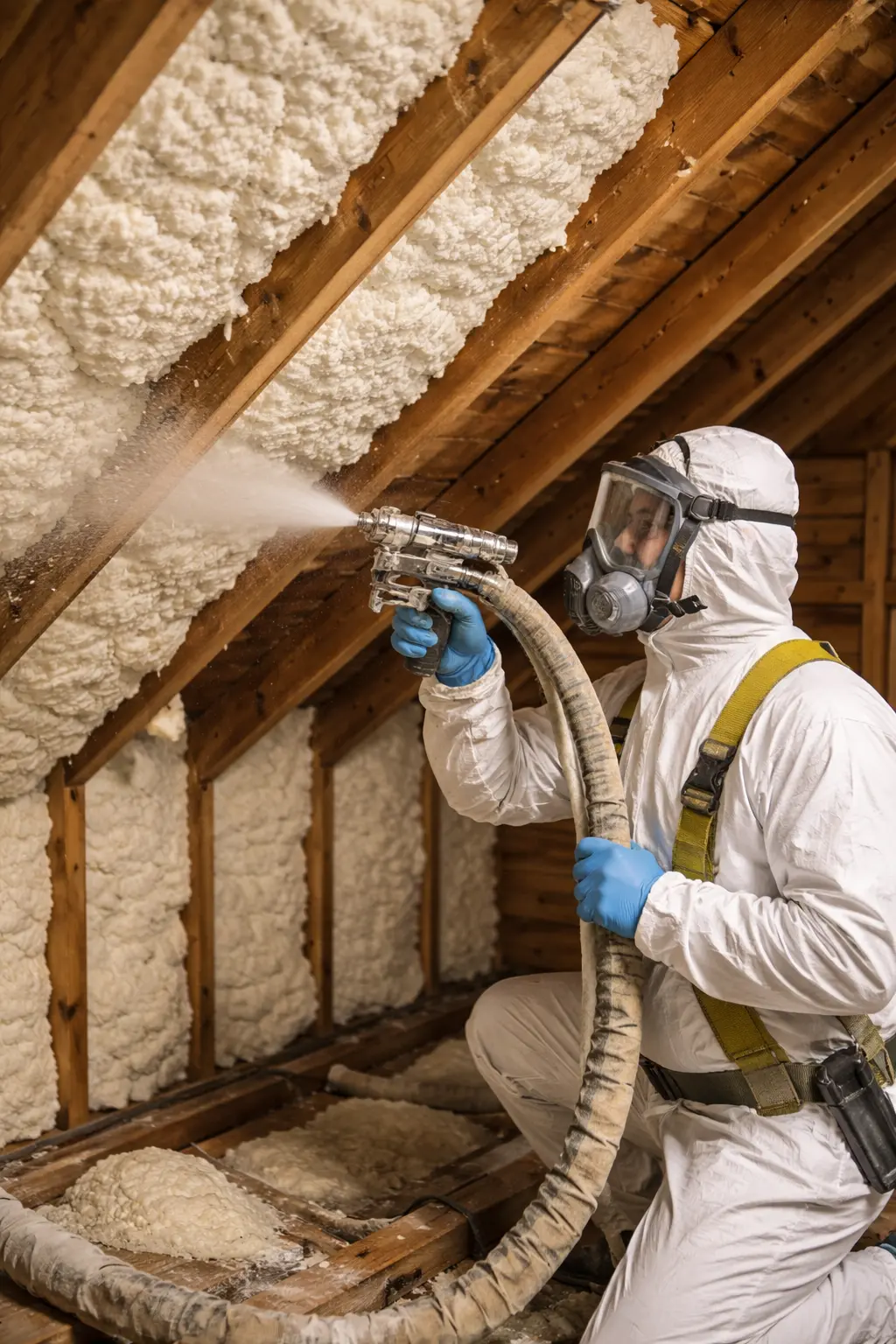
Spray Foam Insulation
in Ireland
Seamless, airtight insulation that lasts 50+ years. Get matched with an experienced local installer and receive a free, no-obligation quote.
Get Free QuotesWhy Choose Spray Foam Insulation?
Spray foam is one of the most effective insulation materials you can get. It expands on contact to seal every gap and crack, creating an airtight thermal barrier that traditional roll or board insulation simply can't match. It's especially effective for awkward spaces, rafter-level insulation, and older homes with irregular structures.
Seamless Coverage
Spray foam expands on contact to fill every gap, crack, and hard-to-reach corner. Unlike rolls or boards, it creates an airtight seal with no joints or seams.
Open Cell vs Closed Cell
Two types to suit different applications. Open cell is lighter and breathable, ideal for attics. Closed cell is denser and acts as a moisture barrier, better for walls and basements.
Attic & Wall Applications
Spray foam works in attics (applied to rafters or between joists), wall cavities, and even basements. It's versatile enough for most insulation challenges.
Long Lifespan
Spray foam insulation lasts 50+ years without settling, sagging, or losing its thermal performance. Once installed, it's effectively a permanent upgrade.
Open Cell vs Closed Cell Spray Foam
The two types of spray foam serve different purposes. Understanding the difference helps you make the right choice for your home.
| Property | Open Cell | Closed Cell |
|---|---|---|
| R-value per inch | R-3.7 | R-6.5 |
| Density | Light & flexible | Dense & rigid |
| Moisture barrier | No. Vapour permeable | Yes. Acts as vapour barrier |
| Best for | Attics, interior walls | Walls, basements, exposed areas |
| Cost | Lower | Higher |
| Removable for inspection | Yes. Can be peeled away | Difficult to remove |
Spray Foam Insulation Costs in Ireland
Spray foam is more expensive than traditional insulation materials, but its superior performance and longevity can justify the investment. Prices depend on the type (open vs closed cell), area, and application.
| Application | Typical Cost |
|---|---|
| Attic (open cell) | €1,500 – €3,000 |
| Attic (closed cell) | €2,500 – €5,000 |
| Wall cavity spray foam | €2,000 – €4,000 |
| Full house spray foam | €5,000 – €10,000 |
Important: Mortgage Lending Considerations
Some mortgage lenders in Ireland have raised concerns about spray foam insulation, particularly closed cell foam applied directly to roof rafters. The issue is that it can make timber inspection difficult during property surveys. This doesn't mean spray foam is problematic, but if you're planning to sell your home in future, it's worth discussing with your installer. Open cell foam applied to rafters is generally less of a concern as it can be removed for inspection. Foam applied to attic floors or wall cavities does not typically raise these issues.
Prices are estimates based on typical Irish installations in 2026. Actual costs depend on area, foam type, thickness, and access. SEAI grants of up to €2,000 may apply for eligible attic insulation work. Request a quote for an accurate price.
Frequently Asked Questions
What's the difference between open cell and closed cell spray foam?
Will spray foam insulation affect my mortgage?
Is spray foam better than mineral wool for attic insulation?
Can spray foam cause condensation problems?
Are SEAI grants available for spray foam insulation?
Get Your Free Spray Foam Insulation Quote
Tell us about your home and we'll match you with an experienced local installer. No obligation, no cost. Just a straightforward quote.
Get Free QuotesFree · No obligation · Takes 30 seconds