Does Insulation Increase Your Home's Value in Ireland?
The Short Answer
Yes. Insulation increases property value in Ireland, primarily through the BER (Building Energy Rating) improvement it delivers. The evidence is clear: homes with better BER ratings sell for more, sell faster, and attract more buyer interest. The question is how much more, and whether the investment makes financial sense.
What the Data Shows
BER and house prices
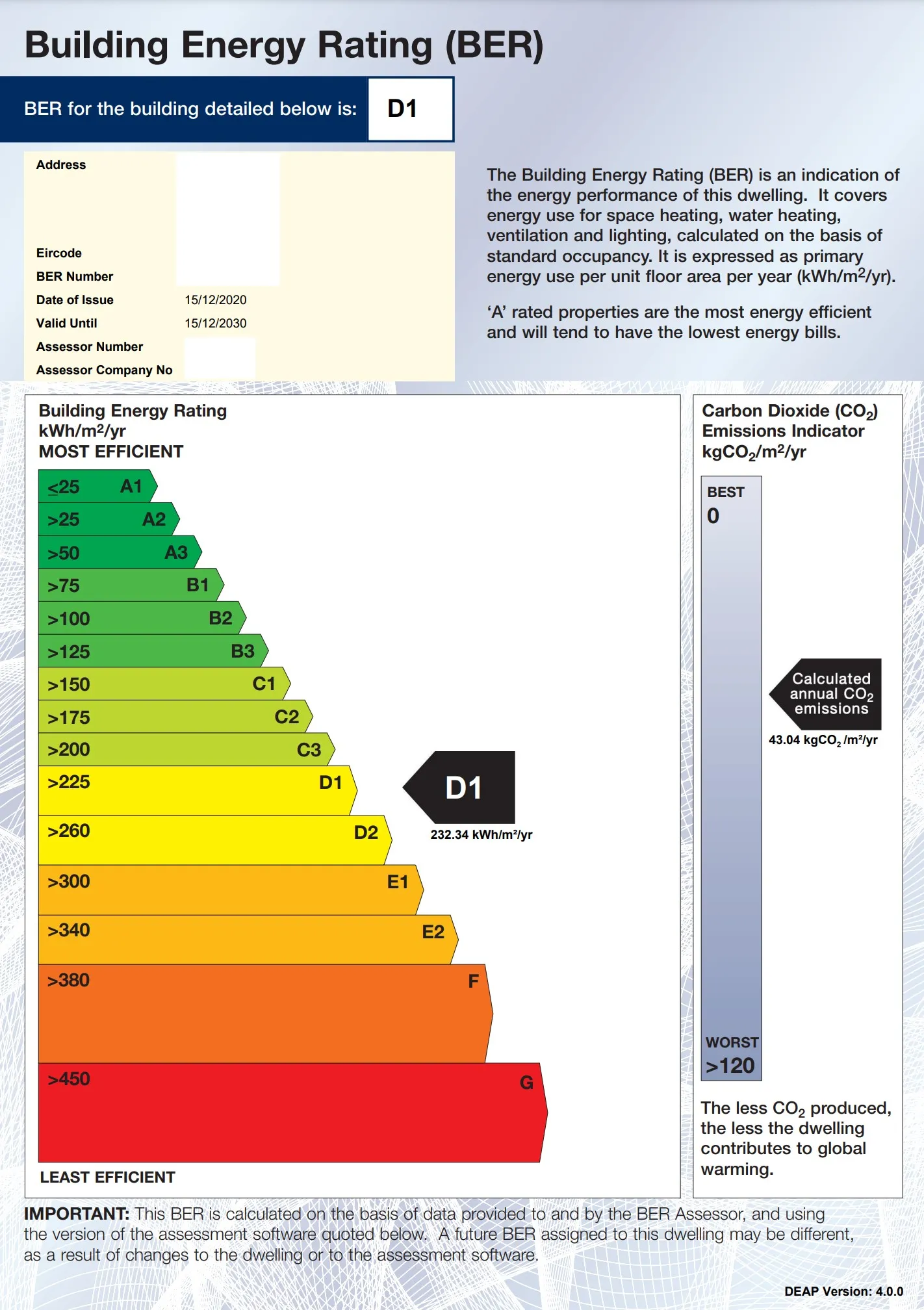
Research from the ESRI (Economic and Social Research Institute) and CSO (Central Statistics Office) has examined the relationship between BER ratings and house prices in Ireland. The key findings:
- Each one-grade improvement in BER adds roughly 1% to 3% to the sale price
- A home rated A or B sells for approximately 5% to 12% more than an equivalent D-rated home
- Homes rated E, F, or G sell at a discount of 5% to 15% compared to average-rated homes
- The BER premium has been increasing as energy costs rise and buyer awareness grows
On a house worth €350,000, a 5% premium is €17,500. A 10% premium is €35,000. These are meaningful numbers.
Speed of sale
Energy efficient homes also sell faster. Estate agents report that homes with BER B or better attract more viewings and spend less time on the market. In a competitive market, a good BER can be the difference between a quick sale and a slow one.
Rental premium
For landlords, better BER ratings allow higher rents. Tenants are increasingly aware of energy costs and will pay more for homes that cost less to heat. A BER improvement from D to B can support a rent increase of 3% to 5%, though this varies by location.
Which Insulation Upgrades Add the Most Value?
Not all insulation investments deliver the same return. Here’s how the main measures compare for a typical semi-detached house:
| Measure | Net Cost (after SEAI grant) | BER Improvement | Estimated Value Added | ROI |
|---|---|---|---|---|
| Attic insulation | €0 - €800 | 1 - 2 grades | €3,500 - €10,000 | Very high |
| Cavity wall fill | €0 - €1,200 | 1 - 2 grades | €3,500 - €10,000 | Very high |
| External wall insulation | €12,000 - €20,000 | 2 - 3 grades | €7,000 - €21,000 | Moderate |
| Internal dry lining | €1,500 - €6,500 | 1.5 - 2.5 grades | €5,000 - €15,000 | Good |
The value added is estimated based on a house value of €350,000 and 1% to 3% per BER grade. Actual premiums vary by location, property type, and market conditions.
The pattern is clear: attic insulation and cavity wall fill deliver the highest ROI because they cost very little after grants but still produce meaningful BER improvements. External wall insulation has a longer payback because the upfront cost is so much higher, even with grants.
For full costs and grant amounts, see our home insulation cost guide and SEAI grants guide.
Beyond BER: Other Ways Insulation Adds Value
Comfort and livability
Buyers can feel the difference the moment they walk in. A well-insulated home is quieter, draught-free, and evenly warm. These aren’t things that show up on a BER certificate, but they influence how a buyer feels about the house.
Lower running costs
When buyers calculate what they can afford, monthly running costs matter. A house with annual heating bills of €900 is more attractive than one costing €2,500. For mortgage applicants, the real affordability of a home includes its energy costs, not just the purchase price.
Visual improvement (EWI)
External wall insulation comes with a new render finish. A house with fresh, clean external walls simply looks better than one with cracked or stained render. The visual upgrade is immediate and obvious.
Future-proofing
Ireland’s climate targets and building regulations are tightening. Minimum BER requirements for rental properties are expected. Buyers increasingly consider whether a home will need costly upgrades in the coming years. An already-insulated home reduces that risk.
When Insulation Doesn’t Add Full Value
Be realistic about the limits:
Location matters more than BER
In Dublin 4 or Dalkey, a BER improvement adds thousands. In a rural area where houses sell for €150,000, the same BER improvement adds proportionally less. The percentage premium is similar, but the absolute amount is smaller.
Diminishing returns at the top
Going from E to C adds significant value. Going from C to B adds less. Going from B2 to A3 adds very little in most markets. Buyers care about avoiding poor ratings more than chasing perfect ones.
The market sets the ceiling
If comparable houses in your area sell for €300,000, insulation won’t push yours to €400,000. It might push it to €315,000 or €330,000, and help it sell faster, but the market has a ceiling.
Overcapitalisation
If you spend €20,000 on external wall insulation and the house is worth €200,000, you’re unlikely to recoup the full cost through a higher sale price. The comfort and energy savings during the years you live there still have value, but purely as an investment in sale price, it may not pay back fully.
The Investment Case: Sell Soon vs Stay Long
Planning to sell within 2 years
Focus on the cheap wins. Attic insulation and cavity wall fill cost very little after grants and deliver noticeable BER improvements. These have the best ROI for sellers. Avoid expensive measures like EWI unless the house genuinely needs it to be sellable.
Planning to stay 5+ years
You benefit from both the property value increase and years of lower energy bills. More expensive measures become justified because the payback period works in your favour. This is where external wall insulation and deeper retrofits make financial sense.
Planning to stay 10+ years
Do everything that makes sense for the house. You’ll recoup the investment through energy savings, comfort, and eventual sale price. The One Stop Shop route is worth considering for comprehensive upgrades.
What Estate Agents Say
Estate agents consistently report that BER rating is now one of the first things buyers ask about. A few observations from the market:
- Homes with BER D or worse are harder to sell and often need price reductions
- BER A and B homes attract more competitive bidding
- Buyers with young families are particularly sensitive to energy efficiency
- The “green premium” is strongest in urban areas and new-build-adjacent markets
- A BER certificate showing recent upgrades signals a well-maintained property
None of this is scientific, but it reflects real market behaviour. Buyers are paying attention to energy ratings in a way they weren’t five years ago.
Frequently Asked Questions
How much does a BER improvement add to my house value?
Roughly 1% to 3% per BER grade improvement, based on ESRI research. On a €350,000 house, moving from D to B (two to three grades) could add €10,000 to €30,000. The actual premium varies by location and market conditions.
Is insulation a better investment than a new kitchen?
It depends on the starting point. If your BER is E or F, insulation delivers a better ROI than a kitchen renovation. If your BER is already C and the kitchen is dated, the kitchen might make more impact on buyers. In general, addressing obvious energy deficiencies first gives the best return.
Do buyers actually check the BER?
Yes. BER is legally required on all property listings in Ireland. It appears on every property ad, and buyers increasingly filter searches by BER rating. Poor ratings stand out.
Should I get a BER assessment before selling?
If you’ve done insulation work that isn’t reflected in your current BER certificate, absolutely. An updated BER that shows a better rating is a selling point. The assessment costs €150 to €300, which is nothing compared to the potential price premium. For more on BER assessments, see our BER rating guide.
Does the SEAI grant affect the value calculation?
Indirectly. Because grants reduce your out-of-pocket cost, the ROI on insulation is higher than it would be at full price. A measure that costs €500 after grants and adds €5,000 to your property value is a no-brainer.