Spray Foam vs Mineral Wool Insulation: Which Should You Choose?
The Two Main Choices for Attic Insulation
When it comes to insulating your attic, most Irish homeowners end up choosing between two options: spray foam or mineral wool (sometimes called rock wool or fibreglass). Both do the job, but they differ in cost, performance, and what they’re best suited for.
This guide breaks down the practical differences so you can decide which one makes sense for your home.
Quick Comparison
| Feature | Spray Foam (Open Cell) | Mineral Wool (Rolled/Blown) |
|---|---|---|
| Cost per m² | €20 - €35 | €8 - €15 |
| Total cost (3-bed semi-d) | €1,400 - €2,200 | €400 - €1,200 |
| SEAI grant (semi-d) | Up to €1,500 | Up to €1,500 |
| You pay (approx) | €0 - €700 | €0 - €400 |
| Thermal conductivity | 0.035 - 0.038 W/mK | 0.035 - 0.044 W/mK |
| Airtightness | Excellent (seals gaps) | Poor (needs separate membrane) |
| Lifespan | 25+ years | 25+ years (if undisturbed) |
| Fire resistance | Low (needs fire barrier) | Excellent (non-combustible) |
| Moisture handling | Open cell breathes; closed cell resists | Breathable, can absorb moisture |
| Installation time | Half a day | Half to full day |
| DIY possible? | No (specialist equipment) | Yes (rolls), No (blown) |
The SEAI grant is the same regardless of material. The grant covers the insulation measure, not the specific product. So the choice comes down to performance needs and budget, not grant strategy.
Mineral Wool: The Affordable Standard
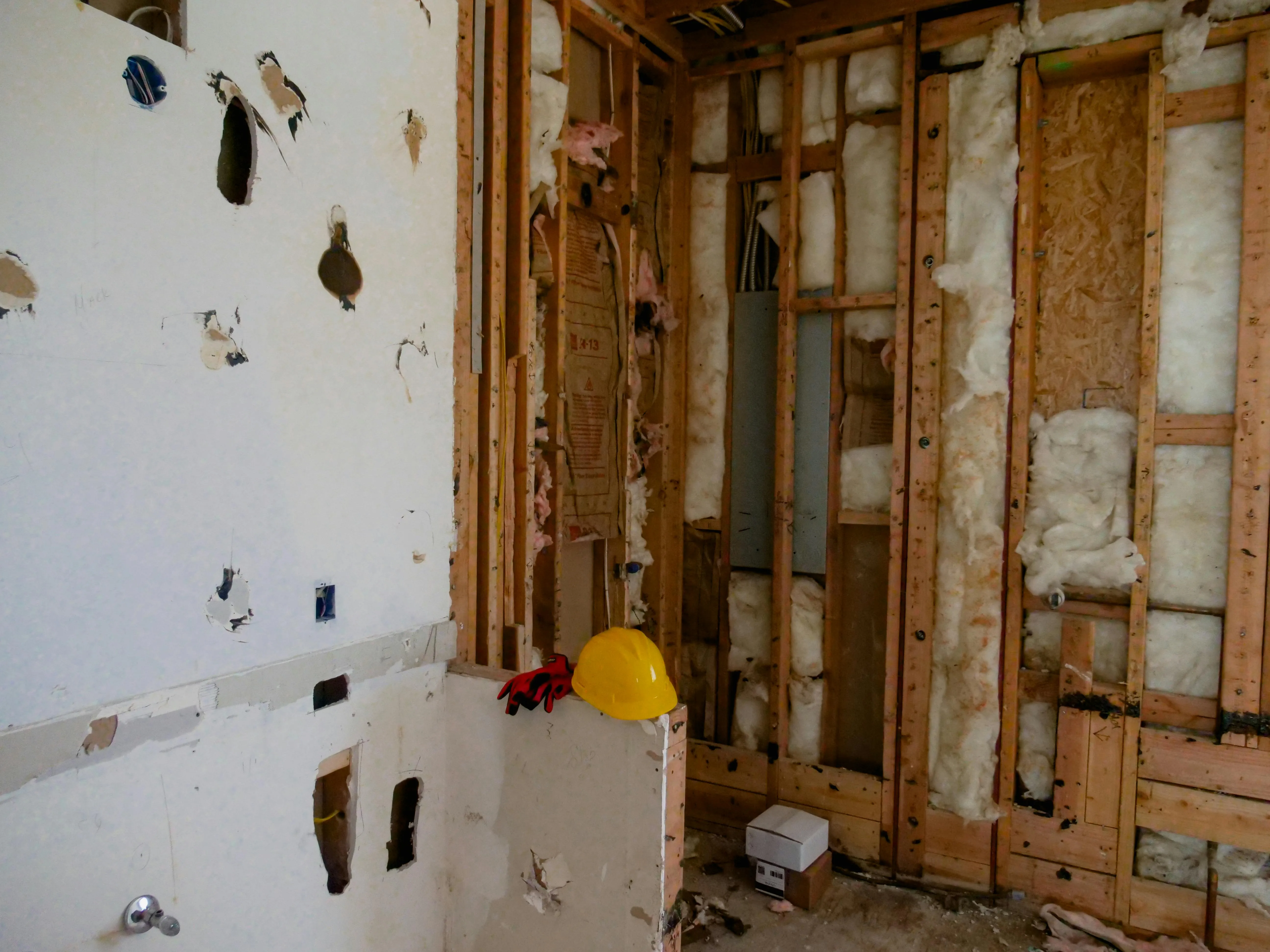
Mineral wool has been the default attic insulation in Ireland for decades. It comes in two forms: rolls that are laid between and over the ceiling joists, and loose fill that’s blown in by machine.
Strengths
Cost. Mineral wool is roughly half to a third of the price of spray foam. For many homes, the SEAI grant covers the entire job or leaves very little to pay.
Fire resistance. Mineral wool is non-combustible. It won’t catch fire and actually acts as a fire barrier. This matters in attics where electrical wiring runs through the insulation.
Proven track record. It’s been used in Irish homes for over 40 years. Performance is well understood and predictable.
DIY option. Rolled mineral wool can be installed by a competent homeowner, though you won’t qualify for the SEAI grant without a registered contractor.
Weaknesses
Airtightness. Mineral wool doesn’t seal gaps. Cold air can pass through and around it, reducing its effective performance. In draughty attics, actual heat savings can be lower than the theoretical value suggests.
Moisture. If mineral wool gets wet (from a roof leak, for example), it loses its insulating properties until it dries out. Prolonged dampness can lead to compression and permanent performance loss.
Settling. Blown mineral wool can settle over time, reducing its effective thickness. Rolled batts stay put but can be displaced by anyone working in the attic space.
For full cost details, see our attic insulation cost guide.
Spray Foam: The Premium Option
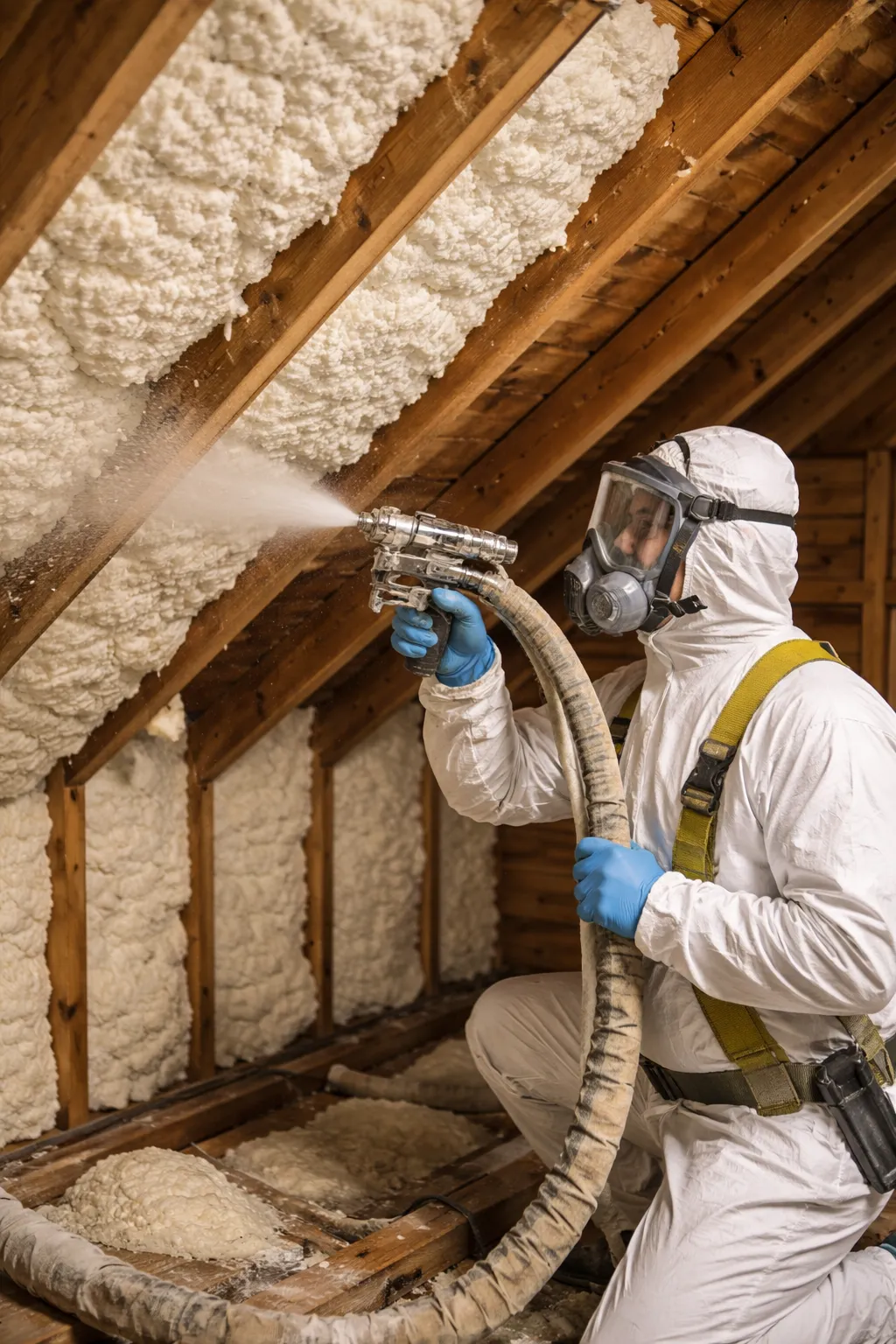
Spray foam insulation is applied as a liquid that expands and hardens on contact. Open cell spray foam is the standard for attics. Closed cell is denser and used where moisture resistance matters (walls, basements).
Strengths
Airtightness. This is spray foam’s biggest advantage. It expands to fill every gap, crack, and irregular space. In older attics with uneven joists, awkward angles, and gaps around pipes, spray foam achieves a much tighter seal than mineral wool ever can.
Performance per thickness. Spray foam achieves good insulation values in a thinner layer, which matters if headroom is tight.
Permanence. Once applied, spray foam doesn’t settle, shift, or compress. It stays exactly where it was sprayed for the life of the building.
Draught elimination. By sealing the entire surface, spray foam eliminates draughts that mineral wool can’t address. Many homeowners notice this as an immediate comfort improvement.
Weaknesses
Cost. You’ll pay roughly double to triple the price of mineral wool. Even with the SEAI grant, it’s a bigger investment.
Not DIY. Spray foam requires specialist equipment and training. You can’t buy cans from a hardware shop and do your attic.
Fire rating. Open cell spray foam is combustible and typically needs a fire barrier (like plasterboard) if the attic is used as a living space. For a standard attic that’s not converted, this is usually not an issue, but check with your installer.
Moisture concerns with closed cell. Closed cell spray foam on the underside of the roof can trap moisture in the roof timbers if ventilation isn’t properly managed. This is a design consideration, not a blanket problem, but it’s worth discussing with your installer.
Removal difficulty. If spray foam needs to be removed (rare, but it happens), it’s a messy, labour-intensive job. Mineral wool lifts out easily.
For full pricing, see our spray foam insulation cost guide.
When Mineral Wool Makes More Sense
- Your budget is tight. Mineral wool gets the job done at half the cost. If money is the main concern, it’s the practical choice.
- Your attic is straightforward. Regular joist spacing, no awkward angles, no conversion planned. Mineral wool handles standard attics well.
- Fire resistance matters. If there’s significant electrical work in the attic or you’re converting it to a living space, mineral wool’s fire rating is a genuine advantage.
- You want to maximise grant value. Because mineral wool costs less, the SEAI grant covers a larger proportion (or all) of the job.
When Spray Foam Makes More Sense
- Your attic is draughty or irregular. Older homes with uneven joists, stone walls meeting the roof line, or lots of gaps benefit most from spray foam’s gap-sealing ability.
- You’re converting the attic. If the attic will become a living space, spray foam between and under the rafters is the most practical approach. You insulate the roof slope rather than the floor, keeping the space warm.
- Comfort is the priority. If you want the biggest possible improvement in how the house feels (not just energy savings on paper), spray foam’s airtightness delivers that.
- Headroom is limited. Spray foam achieves comparable performance in a thinner layer. If every centimetre of height matters, this can be the deciding factor.
What About Blown-In Cellulose?
Blown-in cellulose (recycled paper fibre) is a third option worth mentioning. It costs roughly the same as blown mineral wool, offers decent airtightness (better than rolls, worse than spray foam), and has good environmental credentials. It’s less common in Ireland than mineral wool but some contractors offer it. If eco-friendliness matters to you, it’s worth asking about.
BER Rating Impact
Both spray foam and mineral wool improve your BER rating by a similar amount when installed to the same U-value. The difference is that spray foam tends to achieve better real-world performance because of its airtightness. A BER assessment measures theoretical performance based on material properties and thickness, so on paper they may look similar. In practice, spray foam homes tend to feel warmer.
A typical attic insulation upgrade improves a BER rating by one to two grades regardless of material. The BER assessor will calculate based on the installed thickness and material conductivity.
SEAI Grants
The SEAI grant for attic insulation is the same whether you choose spray foam, mineral wool, or any other material:
| Property Type | Standard Grant | Welfare Recipient / First-Time Buyer |
|---|---|---|
| Detached | €2,000 | €2,500 |
| Semi-detached | €1,500 | €2,500 |
| Mid-terrace | €1,400 | €2,500 |
| Apartment (top floor) | €1,100 | €2,500 |
Your home must have been built and occupied before 31 December 2010, and you need an SEAI-registered contractor. Full details in our SEAI insulation grants guide.
Frequently Asked Questions
Is spray foam worth the extra cost?
It depends on your home. For a straightforward attic in a relatively modern house, mineral wool does a perfectly good job and costs much less. For an older home with a draughty, irregular attic, spray foam’s airtightness delivers a noticeably bigger improvement in comfort. The energy savings on paper may be similar, but the real-world feel of the house can be quite different.
Can spray foam cause problems with roof timbers?
Open cell spray foam applied to the attic floor (between joists) doesn’t affect roof timbers. The concern applies to closed cell foam sprayed directly onto the underside of the roof. In that case, adequate ventilation above the foam layer is essential to prevent moisture being trapped in the timbers. A good installer will assess and design this correctly.
Does the type of insulation affect my mortgage or home insurance?
Some mortgage lenders have concerns about spray foam applied to the underside of the roof (not the attic floor). If you’re planning to sell or remortgage, check with your lender. Standard attic floor insulation of either type is not normally an issue. Home insurance is rarely affected by either material.
Can I top up existing mineral wool with spray foam?
Generally not recommended. Spray foam should be applied to clean surfaces for proper adhesion. If you already have mineral wool that’s in good condition, the most practical upgrade is to add more mineral wool on top. If the existing material is degraded or compressed, it can be removed and replaced with spray foam.
How long does each type last?
Both spray foam and mineral wool have lifespans of 25 years or more when properly installed. Mineral wool can last even longer if it stays dry and undisturbed. Spray foam is effectively permanent as it doesn’t degrade, settle, or absorb moisture.