Spray Foam Insulation Cost in Ireland: 2026 Price Guide
How Much Does Spray Foam Insulation Cost in Ireland?
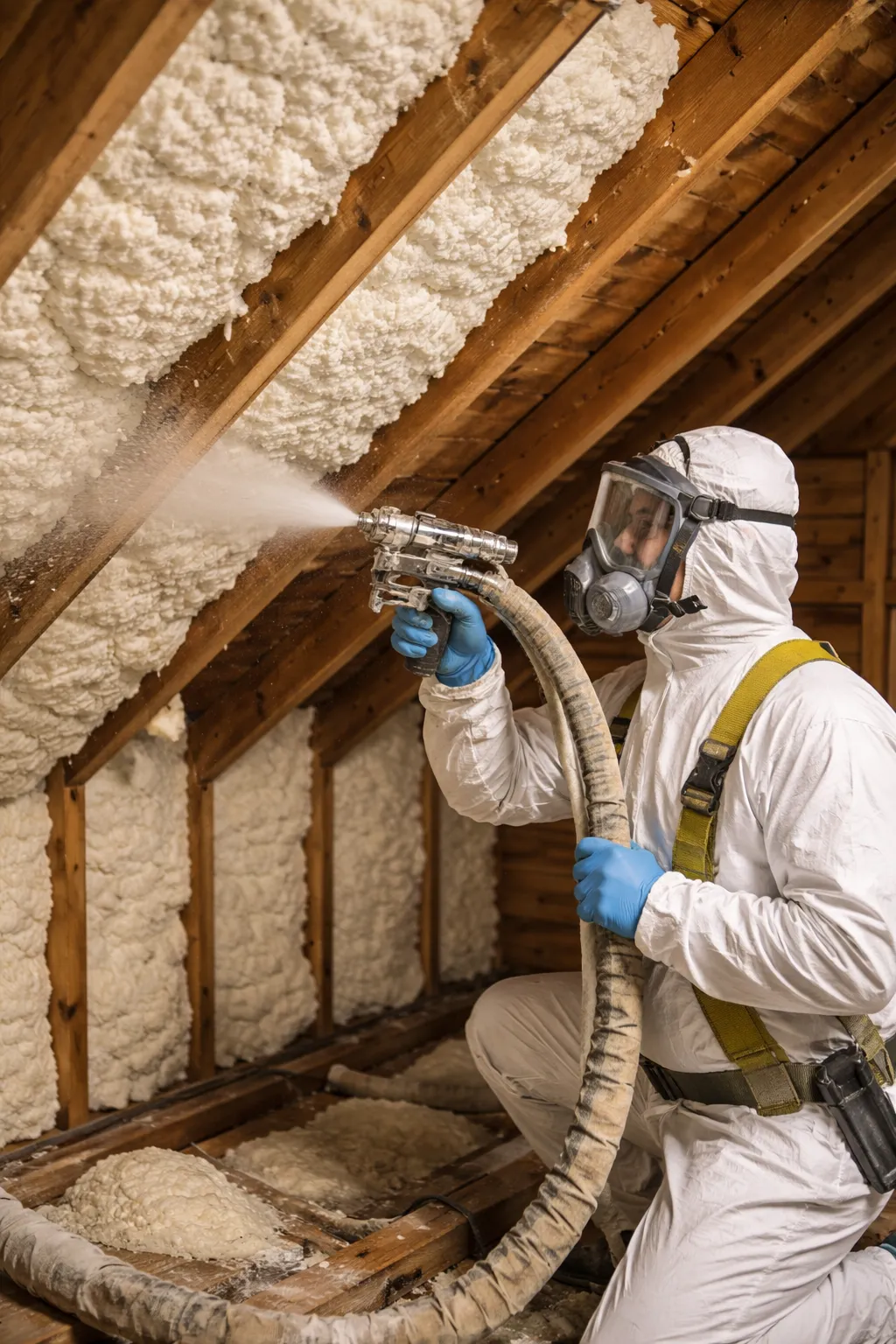
Spray foam insulation typically costs between €20 and €35 per square metre for attic applications, making it more expensive than standard mineral wool. For a 3-bed semi-detached house, expect to pay around €1,400 to €2,200 for attic spray foam insulation.
The higher price buys you superior airtightness and thermal performance. Spray foam expands to fill gaps that other materials can’t reach, which is why it has become a popular choice for Irish homes with irregular attic spaces or older roof structures.
For a comparison of all insulation types and costs, see our complete insulation cost guide.
Spray Foam Cost Per Square Metre
| Application | Cost Per m2 |
|---|---|
| Attic / loft (open cell) | €20 - €35 |
| Attic with vent card | €23 - €38 |
| Internal wall | €20 - €30 |
| External wall (closed cell) | €18 - €25 |
| Shed / garage | €15 - €25 |
| Container / industrial | €16 - €30 |
Open cell spray foam is the standard choice for attic insulation. Closed cell is denser, more expensive, and used where moisture resistance matters (external walls, below-grade applications).
Cost by House Size (Attic Spray Foam)
| Property Size | Typical Cost |
|---|---|
| 2-bed house | €1,300 - €1,800 |
| 3-bed semi-detached | €1,400 - €2,200 |
| 4-bed semi-detached | €1,800 - €2,800 |
| 5-bed detached | €2,350 - €3,800 |
These figures include supply, installation, and a breathable vent card where required. Costs vary depending on attic access, existing insulation removal (if needed), and roof complexity.
Open Cell vs Closed Cell Spray Foam
There are two types of spray foam, and they serve different purposes.
Open Cell Spray Foam
Open cell is the lighter, more affordable option. It expands significantly when applied, filling gaps and creating an effective air barrier. It’s breathable, which means moisture vapour can pass through it. This is the standard choice for attic insulation in Ireland.
- Cost: €20 - €35 per m2
- Best for: attics, interior walls, timber-frame buildings
- R-value: approximately 3.7 per 25mm
- Breathable: yes
- Moisture barrier: no (vapour permeable)
Closed Cell Spray Foam
Closed cell is denser and more expensive. It acts as both a thermal insulator and a moisture barrier. It’s stronger and adds structural rigidity to the surface it’s applied to. Used mainly in commercial, industrial, or below-grade applications.
- Cost: €30 - €50 per m2
- Best for: external walls, basements, commercial buildings, areas exposed to moisture
- R-value: approximately 6.5 per 25mm
- Breathable: no
- Moisture barrier: yes
For most residential attic insulation jobs in Ireland, open cell is the right choice. It’s cheaper, performs well thermally, and its breathability is actually an advantage in Irish conditions where managing moisture in the roof space matters.
What About Vent Cards?
If you’re getting spray foam applied between the rafters in your attic, a breathable vent card is almost always required. This is a membrane installed between the spray foam and the roof slates or tiles, maintaining a 50mm ventilation gap.
The vent card allows moisture to escape from the roof space while the spray foam provides the thermal barrier below. Without it, moisture can become trapped and lead to timber rot over time.
Most installers include the vent card in their quote. If they don’t mention it, ask. It’s a requirement under Irish Building Standards (Part L) for spray foam applied to the underside of a pitched roof.
Adding vent card typically increases the cost by €3 to €5 per square metre.
Is Spray Foam Worth the Extra Cost?
Spray foam costs roughly two to three times more than mineral wool for attic insulation. Here’s when the extra spend makes sense:
Spray foam is a good choice when:
- Your attic has an irregular shape or lots of obstacles (pipes, wiring, awkward angles)
- You want to convert the attic space into usable storage or a room (spray foam between rafters insulates the roof slope rather than the attic floor)
- Your home has significant draughts that standard insulation won’t fix
- The roof structure has gaps where mineral wool can’t be fitted neatly
Standard mineral wool may be better when:
- Your attic is a straightforward, accessible space with regular joists
- You’re on a tight budget and want the most affordable route to insulation
- You don’t plan to use the attic space
- The attic already has some insulation and just needs topping up
For a straightforward attic with good access, mineral wool at €400 to €800 (after grants) does the same thermal job for a fraction of the price. Spray foam’s advantage is airtightness and versatility in difficult spaces.
Read our attic insulation cost guide for a full comparison of attic insulation methods and costs.
SEAI Grants for Spray Foam Insulation
Spray foam insulation qualifies for SEAI attic insulation grants under the individual energy upgrade scheme, provided the work is done by an SEAI-registered contractor.
| Property Type | Standard Grant | Welfare Recipient / First-Time Buyer |
|---|---|---|
| Apartment (top floor) | Up to €1,100 | Up to €2,500 |
| Mid-terrace | Up to €1,400 | Up to €2,500 |
| Semi-detached / end-of-terrace | Up to €1,500 | Up to €2,500 |
| Detached | Up to €2,000 | Up to €2,500 |
The SEAI doesn’t distinguish between spray foam and other attic insulation methods. You get the same grant regardless of material choice. Your home must have been built and occupied before 31 December 2010, and you need to get grant approval before work starts.
Homeowners on qualifying social welfare payments and first-time buyers of existing homes get enhanced rates of up to €2,500 regardless of property type.
For spray foam applied to internal walls, the internal dry lining grant may apply, which can be up to €4,500 for a detached house. Check eligibility with your contractor or the SEAI directly.
For the full rundown on all available insulation grants, see our SEAI grants guide.
How Long Does Spray Foam Installation Take?
Spray foam is one of the faster insulation methods. A typical attic job takes half a day to one full day depending on the size of the property and whether vent cards need to be installed.
The process:
- Attic is prepared and cleared of any stored items
- Vent cards installed between rafters (if insulating the roof slope)
- Spray foam applied in layers using specialist equipment
- Foam expands and cures within minutes
- Excess foam trimmed if needed
The foam is fully cured within 24 hours. There’s minimal disruption compared to other insulation methods, and no drying time to wait for.
Spray Foam vs Other Insulation Methods
| Feature | Spray Foam (Open Cell) | Mineral Wool Rolls | Blown-In Fibre |
|---|---|---|---|
| Cost (3-bed attic) | €1,400 - €2,200 | €400 - €800 | €600 - €1,200 |
| Airtightness | Excellent | Poor | Moderate |
| Ease of installation | Specialist only | DIY possible | Specialist only |
| Attic space usable after? | Yes (if applied to rafters) | No (laid on floor) | No (laid on floor) |
| Lifespan | 30+ years | 20-30 years | 20-30 years |
| SEAI grant eligible | Yes | Yes | Yes |
The biggest practical difference is where the insulation goes. Mineral wool and blown-in fibre sit on the attic floor, which means the attic space above stays cold and can’t be used for much. Spray foam applied between the rafters insulates the roof slope, making the attic space itself warm and usable.
Frequently Asked Questions
Does spray foam insulation cause problems with mortgage surveys?
This is a common concern. Some mortgage surveyors and lenders have flagged spray foam insulation, particularly when it’s been applied directly to the underside of roof tiles without a vent card. Properly installed spray foam with a vent card and ventilation gap is generally accepted. If you’re planning to sell, it’s worth keeping your installation certificate and ensuring the work was done to Building Standards.
How long does spray foam insulation last?
Spray foam has a lifespan of 30 years or more. It doesn’t settle, sag, or degrade the way some other insulation materials can over time. Once applied, it stays in place and maintains its thermal performance.
Can spray foam be removed?
It can, but it’s labour-intensive. Spray foam bonds to the surface it’s applied to, so removal involves scraping or cutting it away. This is worth knowing before committing, particularly if the roof structure may need repair or replacement in the future.
Is spray foam insulation safe?
Yes, once cured. During installation, the area must be well-ventilated and occupants should stay out of the space for a few hours. Once the foam has set (within 24 hours), it’s inert and safe. It does not off-gas in normal conditions.
Can I get spray foam on my walls?
Yes. Closed cell spray foam can be applied to internal or external walls, though it’s less common than board insulation for walls in Ireland. It’s more typically used in timber-frame construction where filling the cavity between studs is the goal.