Attic Insulation Cost in Ireland: 2026 Price Guide
How Much Does Attic Insulation Cost in Ireland?
Attic insulation is the single best value energy upgrade for most Irish homes. For a 3-bed semi-detached house, expect to pay between €400 and €2,200 depending on the method. After SEAI grants, many homeowners pay under €800.
Up to 25% of a home’s heat is lost through the roof, so getting the attic properly insulated has an outsized impact on comfort and heating bills. Payback is typically one to two years, which is faster than any other insulation measure.
For a comparison of all insulation types, see our complete insulation cost guide.
Cost by Insulation Method (3-Bed Semi-Detached)
| Method | Typical Cost | SEAI Grant (semi-d) | You Pay (approx) |
|---|---|---|---|
| Mineral wool rolls (top-up) | €400 - €800 | Up to €1,500 | €0 - €300 |
| Mineral wool rolls (new) | €500 - €1,200 | Up to €1,500 | €0 - €500 |
| Blown-in loose fill | €600 - €1,200 | Up to €1,500 | €0 - €500 |
| Spray foam (between rafters) | €1,400 - €2,200 | Up to €1,500 | €0 - €1,500 |
Mineral wool is the most affordable option and works well in most attics. Blown-in fibre is good for topping up or filling awkward spaces. Spray foam costs more but provides superior airtightness and lets you use the attic as warm storage or a room.
For a detailed breakdown of spray foam costs and when it makes sense, see our spray foam insulation cost guide.
Attic Insulation Methods Explained
Mineral Wool Rolls
The most common and affordable method. Rolls of mineral wool (glass fibre or rock wool) are laid between and over the attic joists to a depth of at least 300mm. It’s straightforward, effective, and SEAI-grant eligible.
Pros: Cheapest option, proven performance, easy to top up later, good fire resistance. Cons: Makes the attic floor unusable for heavy storage (you shouldn’t compress the insulation by storing things on it). Attic space stays cold.
Blown-In Loose Fill
Loose cellulose or mineral fibre is blown into the attic space using specialist equipment. It settles between and over joists, filling gaps that rolls can miss. A good choice for attics with lots of pipes, wiring, or irregular joist spacing.
Pros: Fills gaps better than rolls, quick to install, good for top-ups. Cons: Can settle slightly over time (though modern materials are treated to minimise this). Attic space stays cold. Specialist equipment required.
Spray Foam (Between Rafters)
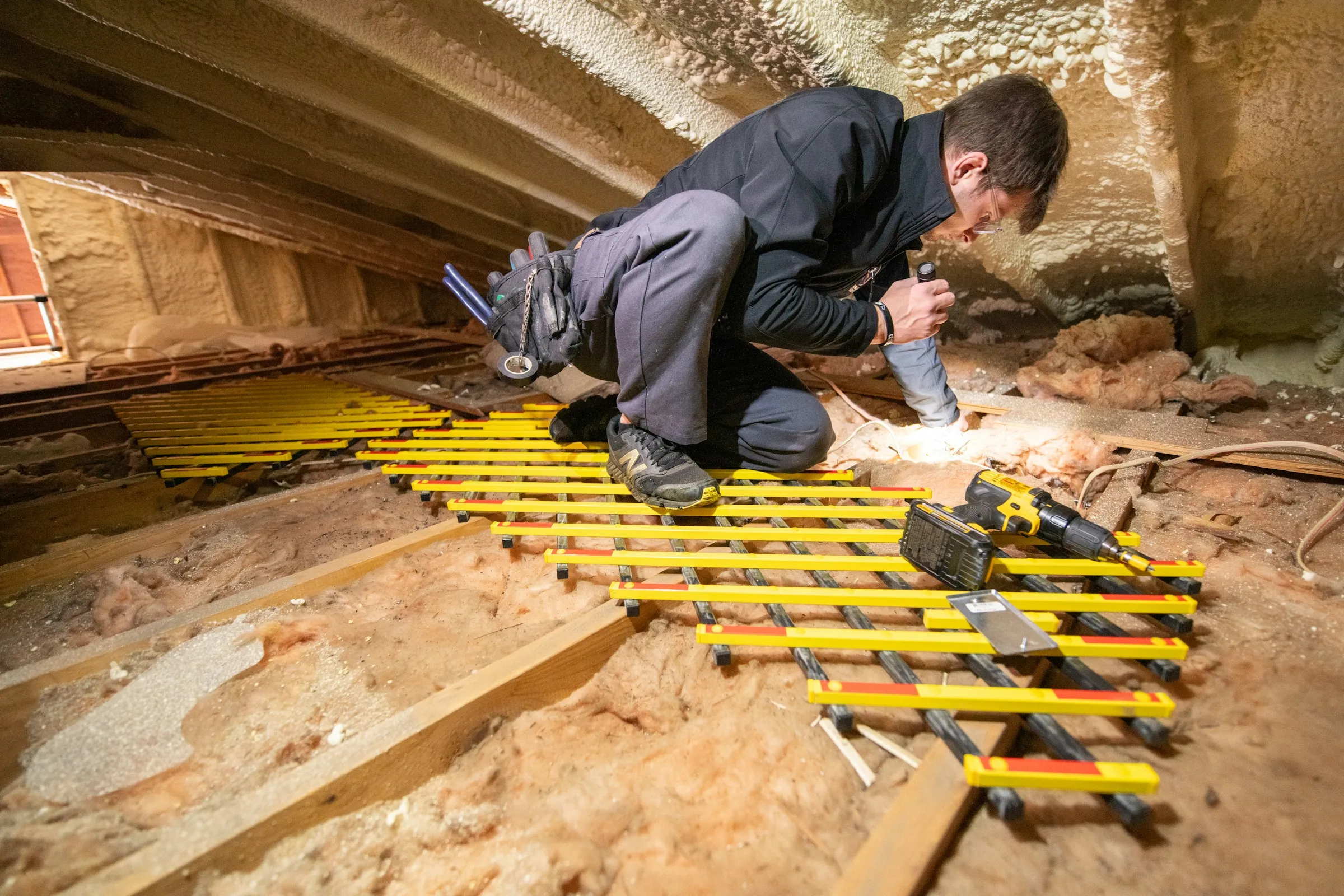
Open cell spray foam is applied to the underside of the roof between the rafters. This insulates the roof slope rather than the attic floor, making the attic space itself warm.
Pros: Excellent airtightness, attic stays warm and usable, fills irregular gaps. Cons: Two to three times the cost of mineral wool, requires vent card installation, harder to remove if roof work is needed later.
Which Method Is Right for You?
If you just want your home to be warmer and your heating bills lower, mineral wool rolls or blown-in insulation on the attic floor will do the job at the lowest cost. This is the right choice for most people.
If you want to use your attic as a warm room, office, or proper storage area, spray foam between the rafters is the way to go. The attic itself becomes part of the heated envelope of the house.
Cost by House Size
| Property Size | Mineral Wool | Blown-In | Spray Foam |
|---|---|---|---|
| 2-bed terraced | €300 - €600 | €500 - €900 | €1,300 - €1,800 |
| 3-bed semi-detached | €400 - €800 | €600 - €1,200 | €1,400 - €2,200 |
| 4-bed semi-detached | €500 - €1,000 | €700 - €1,400 | €1,800 - €2,800 |
| 5-bed detached | €700 - €1,500 | €900 - €1,800 | €2,350 - €3,800 |
What Affects Attic Insulation Costs?
Current Insulation State
A top-up job (adding insulation on top of what’s already there) is cheaper than a full new installation. If your attic has 100mm of insulation from the original build, you may only need another 200mm on top to reach the recommended 300mm.
If there’s no existing insulation, the cost is slightly higher because the first layer needs to go between the joists before cross-layers go on top.
Attic Access
A standard attic hatch with reasonable headroom is ideal. Costs increase if the hatch is very small, the attic has low headroom, or sections are difficult to reach. Some older homes have attic access that requires a ladder through a bedroom wardrobe, which adds time and complexity.
Obstructions
Water tanks, pipes, electrical wiring, and boarded-over sections all add to the work. Pipes and tanks need to be insulated separately (to prevent freezing once the attic floor is insulated and the space above is cold). Existing boarding may need to be lifted and relaid on raised supports.
Ventilation Requirements
Adequate ventilation in the attic is essential. When you insulate the attic floor, the space above becomes colder, which increases the risk of condensation. Proper ventilation through soffit vents, ridge vents, or tile vents prevents this. Your installer should assess and address ventilation as part of the job.
SEAI Grants for Attic Insulation
Attic insulation qualifies for SEAI grants under the individual energy upgrade scheme:
| Property Type | Standard Grant | Welfare Recipient / First-Time Buyer |
|---|---|---|
| Apartment (top floor) | Up to €1,100 | Up to €2,500 |
| Mid-terrace | Up to €1,400 | Up to €2,500 |
| Semi-detached / end-of-terrace | Up to €1,500 | Up to €2,500 |
| Detached | Up to €2,000 | Up to €2,500 |
Plus €50 towards the post-works BER assessment.
These grants apply regardless of whether you choose mineral wool, blown-in, or spray foam. The key requirements are:
- Your home must have been built and occupied before 31 December 2010
- Work must be done by an SEAI-registered contractor
- Insulation must meet minimum depth and U-value requirements
- You must get grant approval before work starts
- A post-works BER assessment is required
In many cases, the grant covers most or all of the cost of mineral wool or blown-in attic insulation. This makes it one of the easiest home energy upgrades to justify financially. Homeowners on qualifying welfare payments and first-time buyers of existing homes get enhanced rates of up to €2,500 regardless of property type.
For the full details on grant eligibility and how to apply, see our SEAI grants guide.
How Long Does Attic Insulation Take?
Attic insulation is one of the fastest home improvement jobs:
- Mineral wool rolls: Half a day to one day for a standard house
- Blown-in insulation: Two to four hours for most homes
- Spray foam: Half a day to one day including vent card installation
There’s minimal disruption. The installer works in the attic, and you don’t need to clear rooms or move furniture. The only preparation needed is ensuring the attic hatch is accessible and clearing any stored items from the attic.
Payback Period
Attic insulation typically has the quickest payback of any home insulation measure:
| Scenario | Cost After Grant | Annual Savings | Payback |
|---|---|---|---|
| Mineral wool (no existing insulation) | €0 - €500 | €200 - €400 | Under 1 year |
| Mineral wool (top-up) | €0 - €300 | €100 - €200 | Under 1 year |
| Spray foam | €800 - €1,500 | €200 - €400 | 2 - 4 years |
Even spray foam, the most expensive attic insulation method, typically pays for itself within four years. Mineral wool insulation, especially when grants cover most of the cost, can pay back within months.
These savings assume oil or gas central heating. Actual savings vary depending on fuel type, heating habits, and the home’s overall thermal performance.
Frequently Asked Questions
Can I insulate my attic myself?
Laying mineral wool rolls is one of the more DIY-friendly insulation jobs. However, you won’t qualify for SEAI grants unless the work is done by a registered contractor. Given that grants often cover most of the cost, it usually makes more financial sense to use a professional.
Blown-in insulation and spray foam both require specialist equipment and should always be done by a professional.
How do I know if my attic needs more insulation?
Look at the current depth. The recommendation is at least 300mm (about 12 inches) of mineral wool or equivalent. If you can see the tops of the joists, you almost certainly need more. If the insulation is level with or below the joists (typically 100mm to 150mm), topping up will make a noticeable difference.
Will attic insulation stop condensation in my attic?
Proper attic insulation combined with adequate ventilation should reduce condensation, not cause it. If your attic currently has condensation issues, insulating the floor without addressing ventilation could make it worse. Any good installer will assess ventilation as part of the job.
Should I insulate the attic floor or the roof slope?
For most people, insulating the attic floor is the better choice. It’s cheaper, simpler, and equally effective at keeping heat in the living space below. Insulating the roof slope (typically with spray foam) only makes sense if you want the attic space itself to be warm and usable.
Can I store things in the attic after insulation?
If you insulate the attic floor with mineral wool or blown-in material, you shouldn’t place heavy items directly on top of it. Compressing the insulation reduces its effectiveness. If you need storage, raised boarding on stilts above the insulation is the solution, though this adds to the cost.
If you insulate with spray foam between the rafters, the attic floor stays clear and you can use the space normally.
Is 300mm of attic insulation enough?
300mm of mineral wool is the current standard recommendation and is required to achieve the target U-value of 0.16 W/m2K for attic insulation. Going beyond 300mm gives diminishing returns. The jump from 0mm to 300mm is dramatic. The jump from 300mm to 400mm is barely noticeable.